
Venetian Triangle - Camping Union Lido Park & Resort
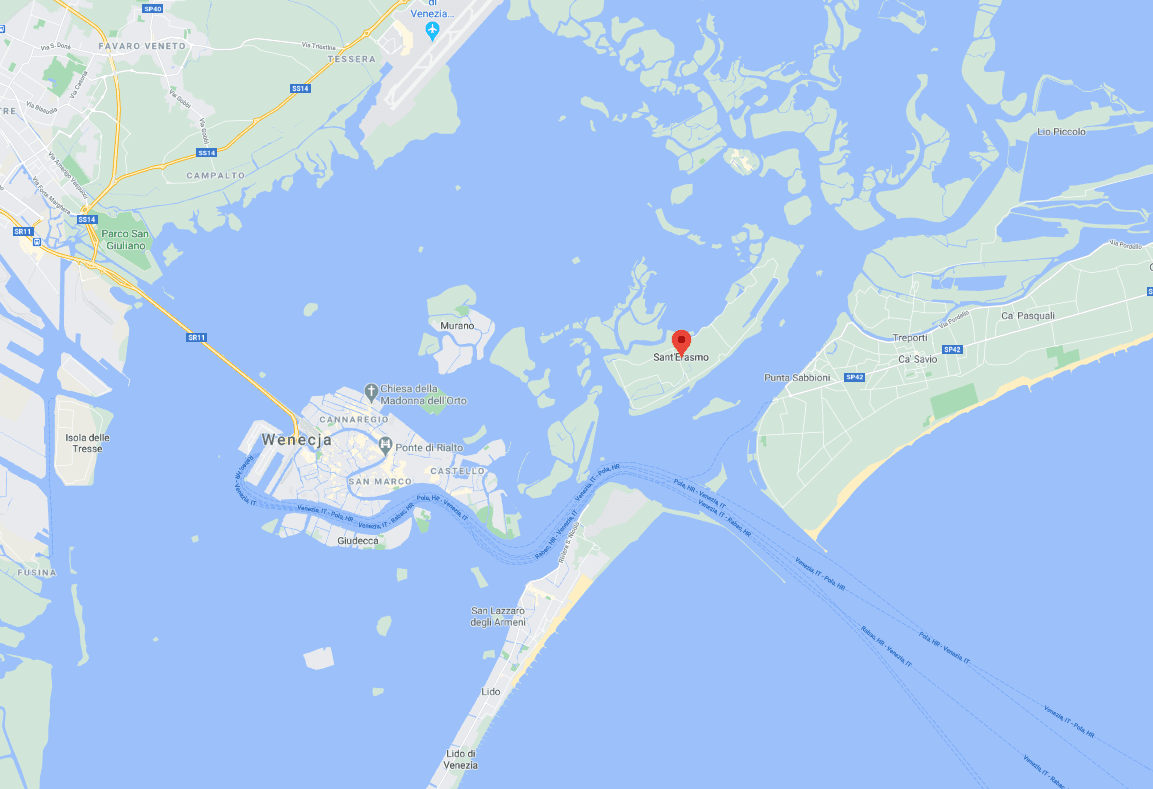
Venice does not need to be advertised to anyone. This part of Italy is full of picturesque islets, one is prettier than the other. Today we will go on a journey through three that form a clear triangle on the map. This is Murano, Burano and ... no, not Punta Sabbioni, but in the middle of the Sant'Erasmo statue, the island of artichokes. Give them at least a few days, otherwise you may feel unsatisfied. If you are looking for accommodation, we recommend the five-star Camping Union Lido Park & Resort . It is located about 18 km east of Venice and is waiting for visitors from April to October.
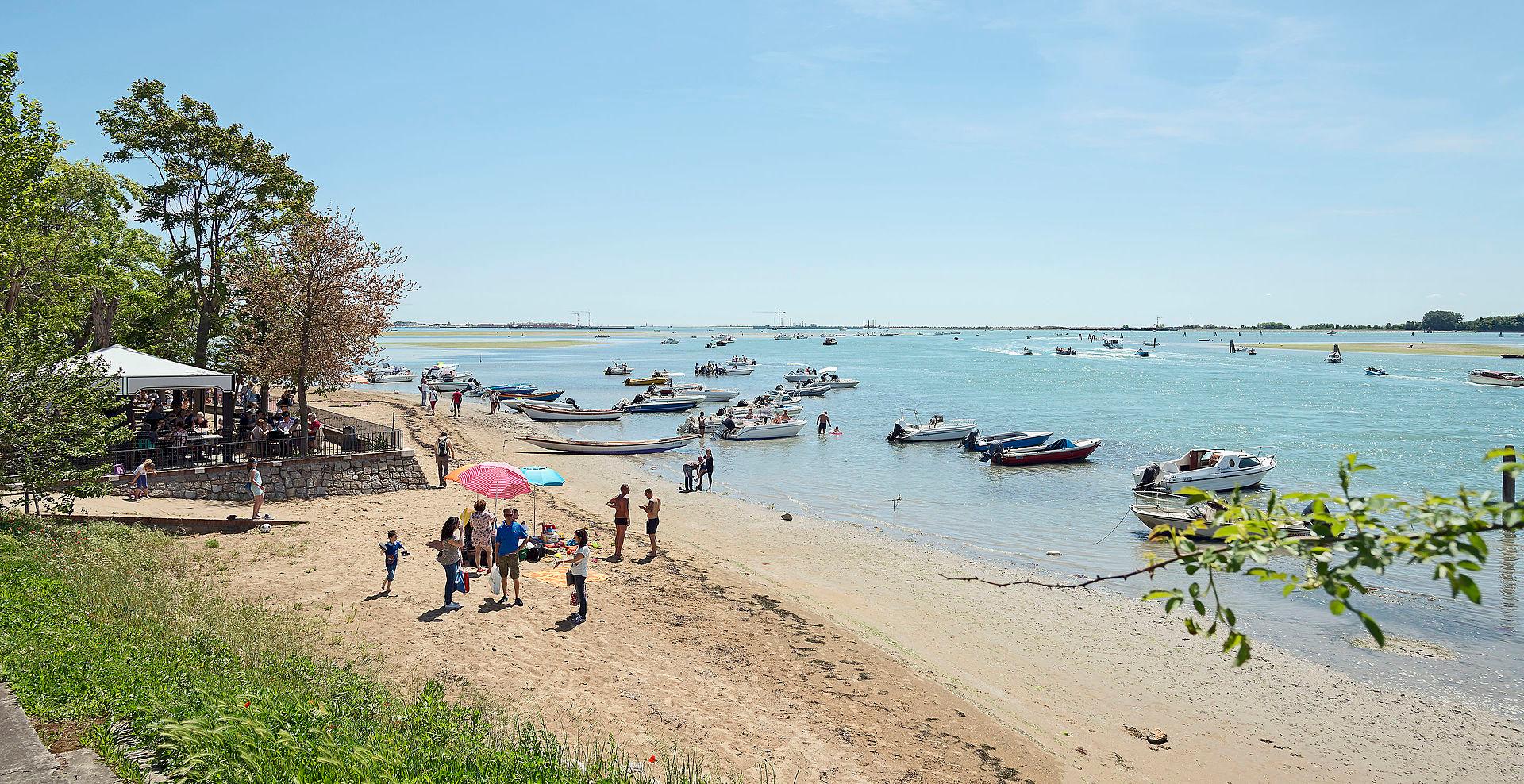
Sant'Erasmo - the garden of Venice
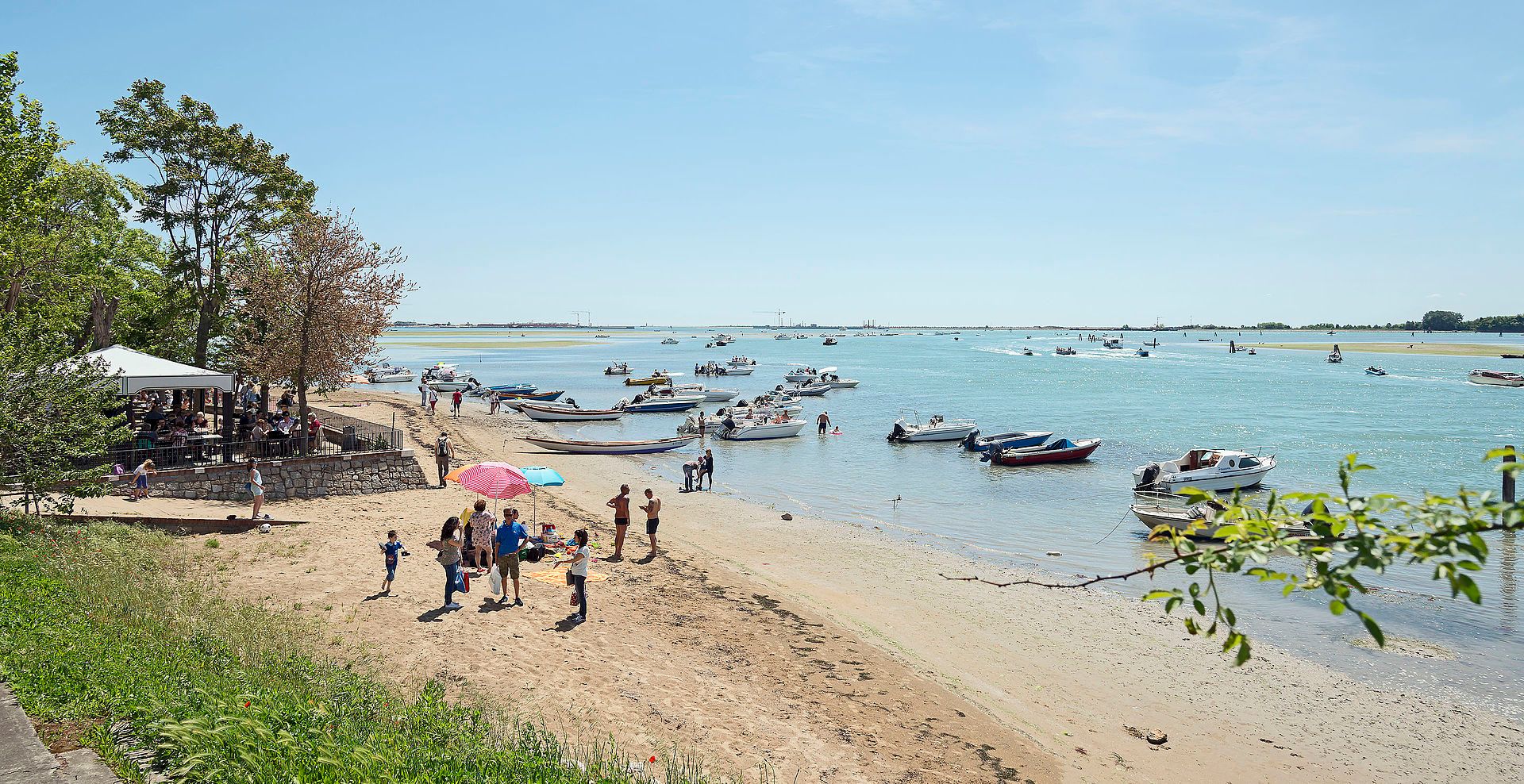
We will start at the end, i.e. from the island, which is only second in size to the historic part of Venice, and is located approx. 7 km from the city. You can easily get to Sant'Erasmo - just take the ferry that departs from Marina Fiorita (approx. 8 km from the campground).
The location of the island and the incredibly fertile land on it have been the reason for its strategic use for hundreds of years. Already in the 16th century, Sant'Erasmo supplied Venice with herbs, fruit and wine. Today, mainly asparagus and artichokes are grown there, including the famous Italian variety of purple color.
Tourists visiting the island can visit the remains of the fortifications. The most impressive of them is Maximilian's Tower, a round structure built in the first half of the 19th century. The church of Cristo Re is also worth seeing.
If you are going to come to Italy in May, we recommend visiting Sant'Erasmo on the second Sunday of the month. This is when the Violet Artichoke Festival takes place. The rich program of the event includes various types of shows and tasting of local products .
The glass island of Murano
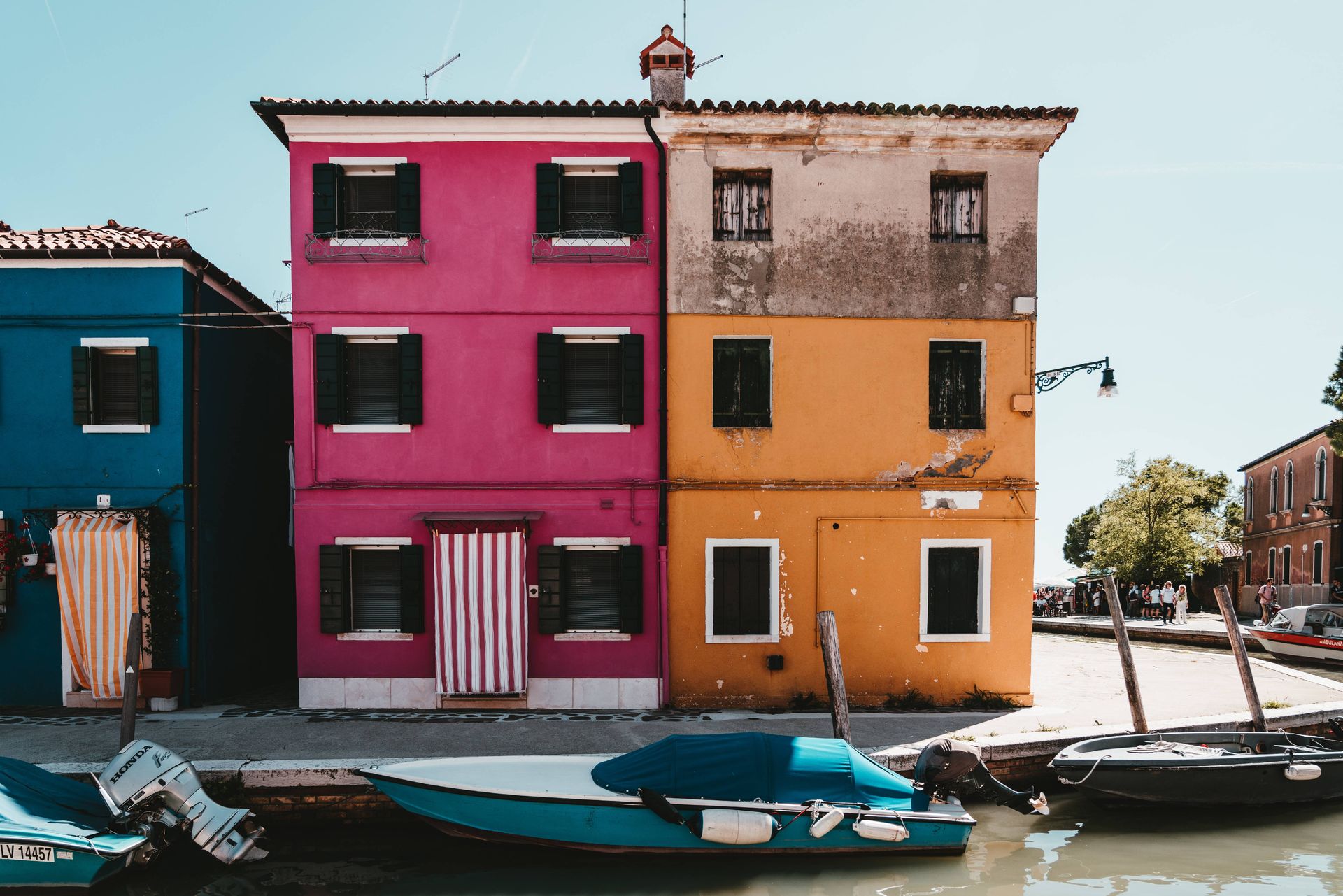
The second island is actually not an island, but a group of seven islands. It is approximately 19 km from the campsite and also has a ferry from Marina Fiorita. Murano was first mentioned in the 9th century. The island is famous for its glass production, which began on a large scale in the 13th century. It is worth noting, however, that traces of manufacturing over 3500 years have been found in these areas. The glassware produced here nowadays carries the registered trademark 'Vetro artistico di Murano', that is, 'Murano art glass'. It is a popular souvenir, eagerly bought by tourists, which can be seen, among others after the number of stores offering glass vases, lamps, figurines and jewelry.
If you visit Murano , you will have the opportunity to learn about the history of glass and glassware production. For this, you must visit the Palazzo Giustinian, or Glass Museum . Other interesting places worth seeing include the Church of St. Peter with the 19th-century clock tower and the Cathedral of St. Maria and Donat.
Burano - an island of colorful houses
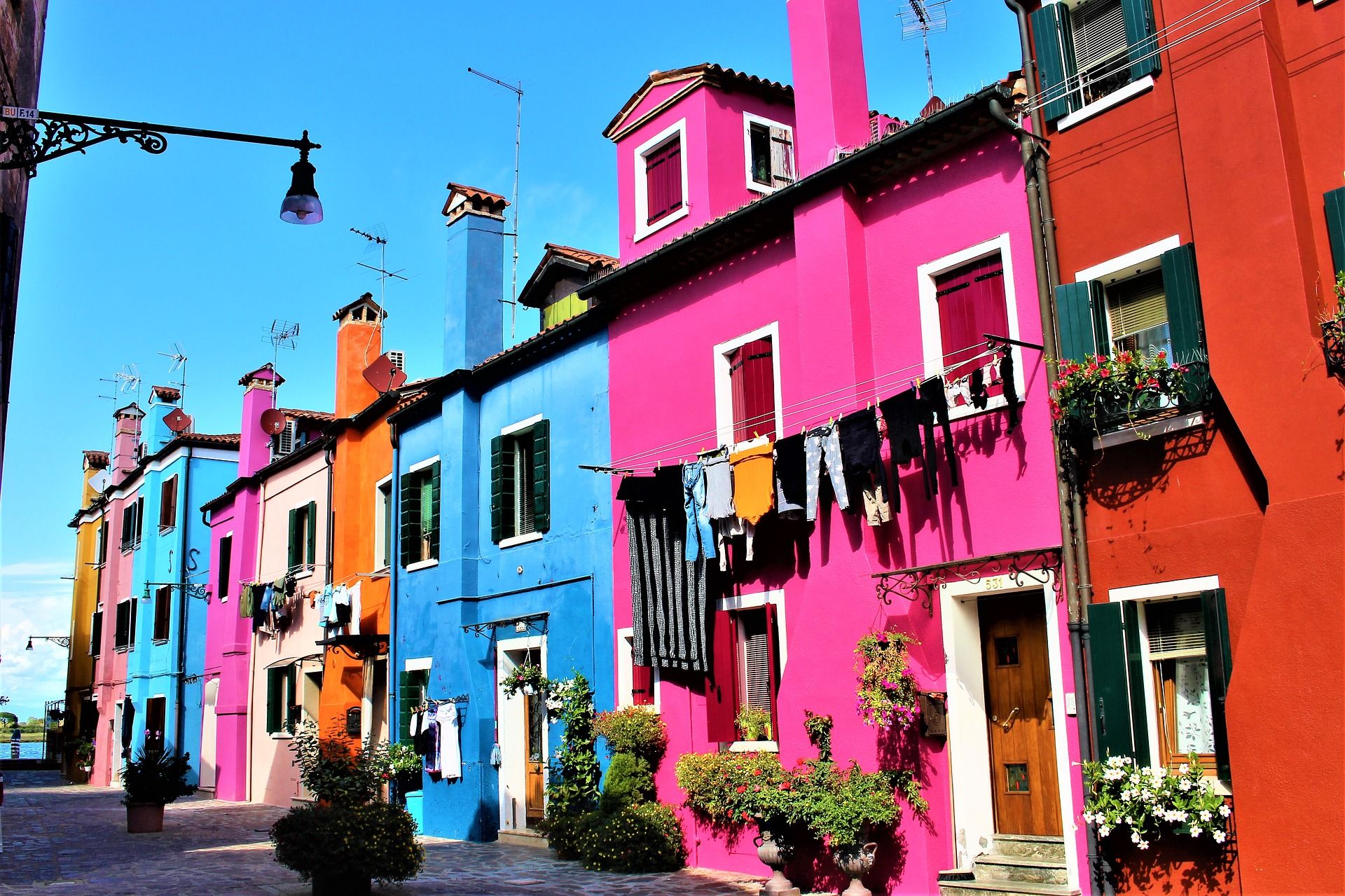
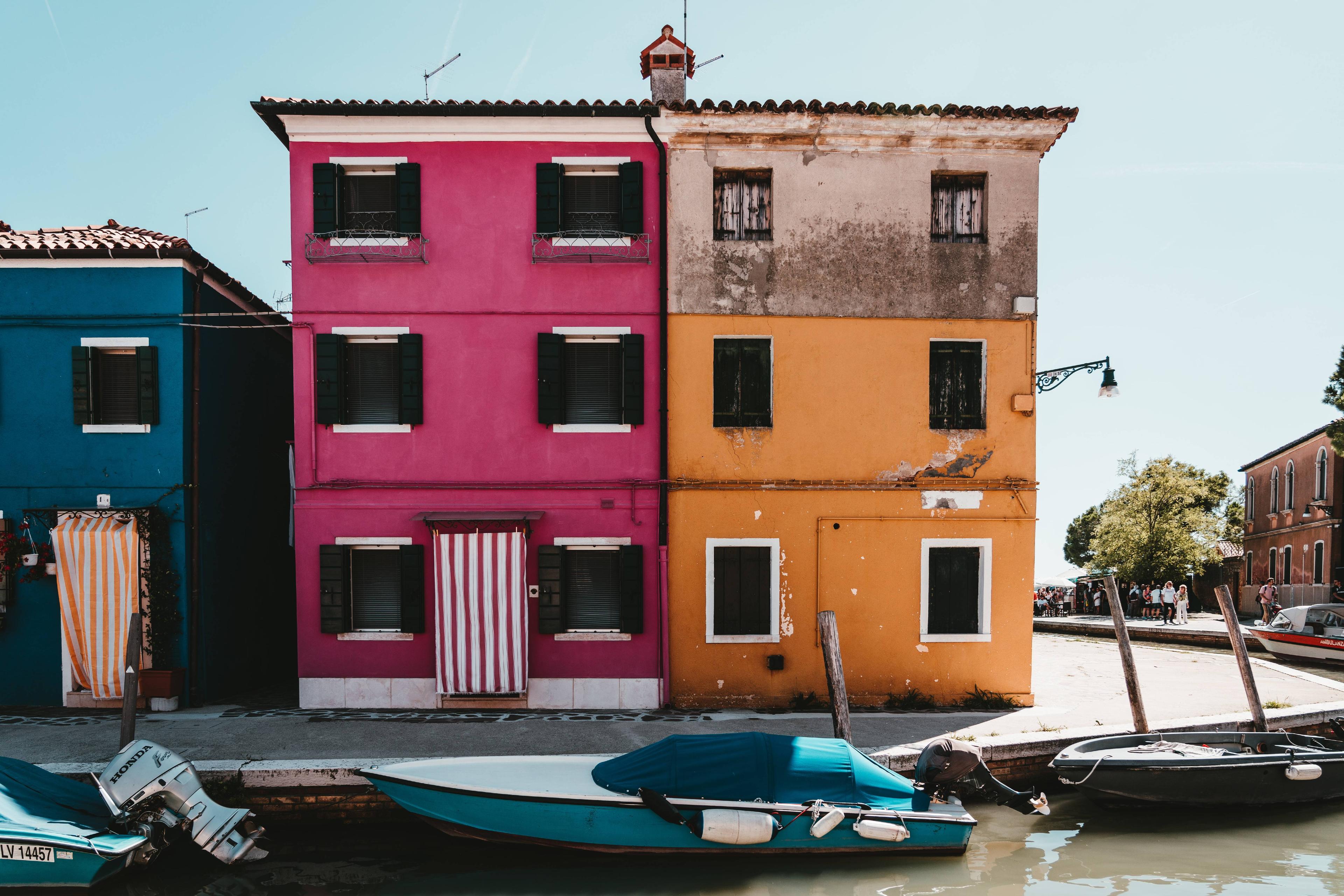
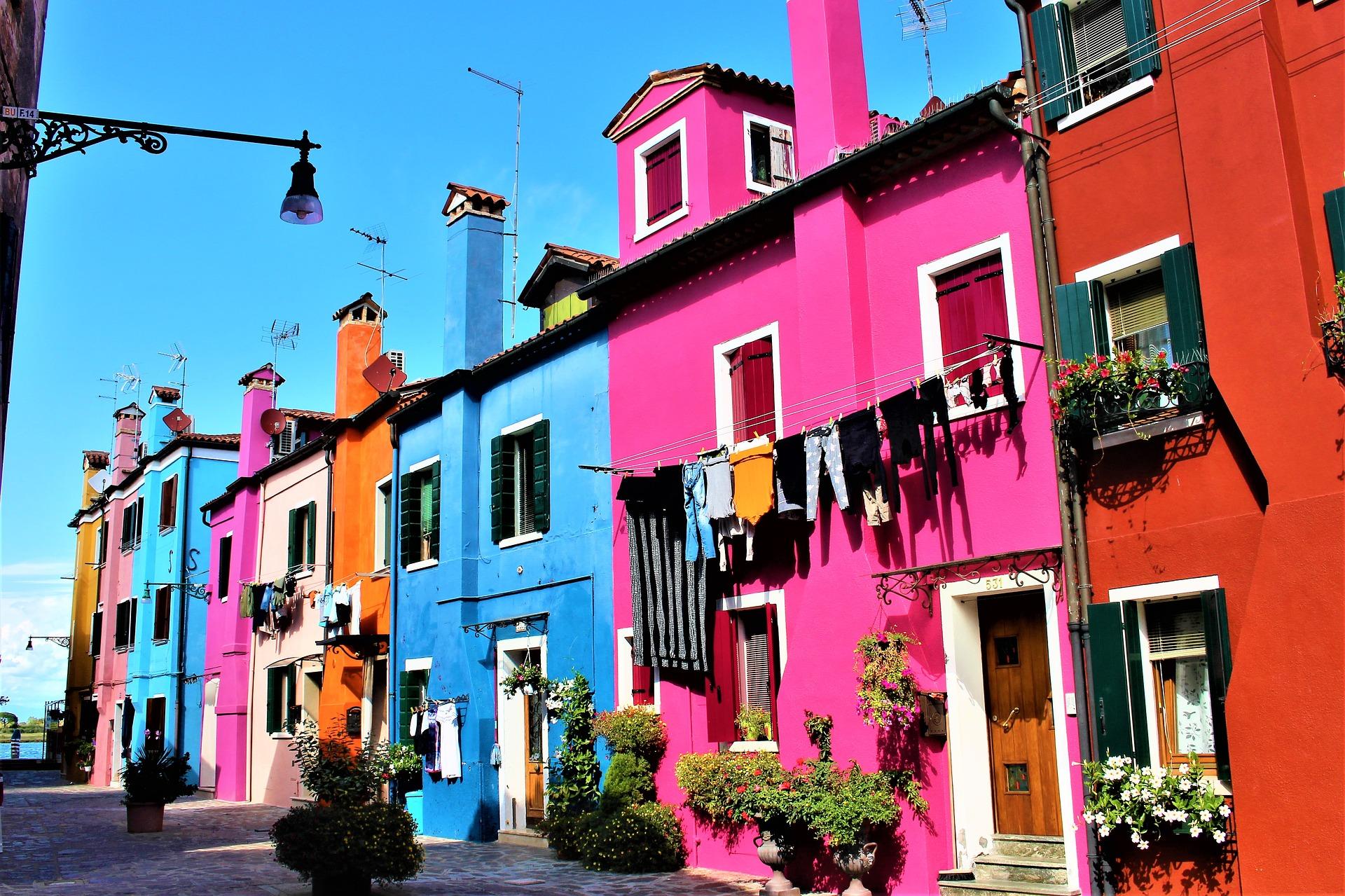
The last island in our itinerary is Burano , and we can find it approx. 12 km from Union Lido. After disembarking the ferry (starting from Marina Fiorita), the first thing you notice are the colors. Various, numerous, and all wonderful. The local architecture focuses on colors, thanks to which Burano's residential houses are joyfully colorful and eye-catching. It does not matter that these colorful facades are the result of a practical approach to the issue of fog. The local ones are so frequent and dense that it would be difficult to find your own home if it were not for the intense colors of the walls.
It is worth going for a walk not only in the fog and take a closer look at this blaze of colors. As Burano is in fact a maze of streets and canals, this trip may take some time. But it will certainly be an extremely pleasant experience.
Apart from cheerful houses, the island is famous for lace making. Their history dates back to the 15th century. Originally, the production was carried out by nuns in monasteries, now it is a slightly forgotten tradition cultivated in individual places on the island. Take a look at the Museo del Merletto, the Lace Museum, located in the historic Podestà Palace in Torcello, in Galuppi Square. Among the exhibits are lace, you will also learn more about this otherwise interesting branch of local crafts.
Holidays on Union Lido - the taste of artichoke, glass and lace
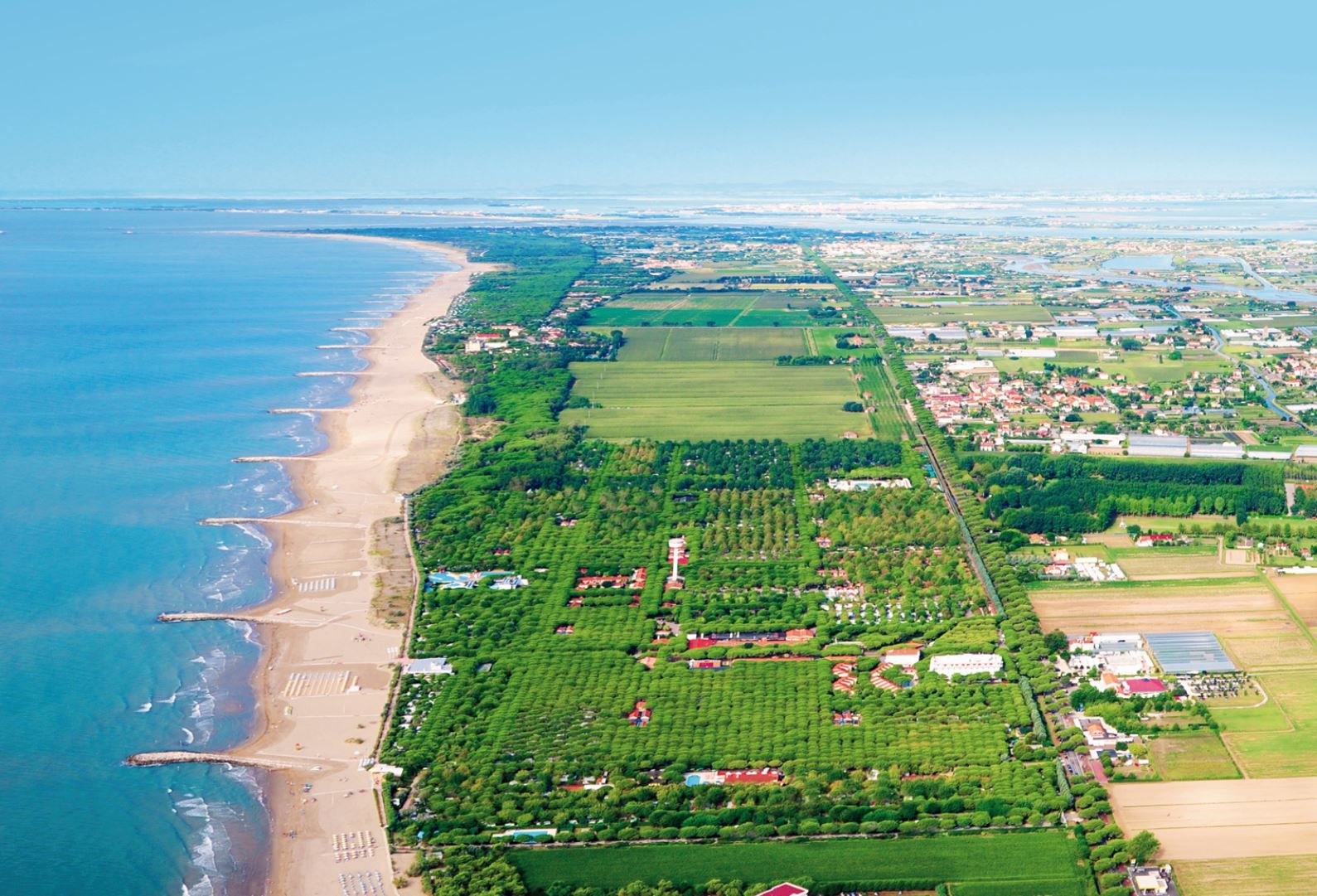
As you can see, while relaxing at the Union Lido Park & Resort Campground , you will have the opportunity to gain a lot of experience. You can get to know all three islands, taste the famous purple artichokes, see the beautiful Murano glassware or admire the colors of the houses on Burano. And this is not even a fraction of the attractions that await tourists in the Gulf of Venice.

A writer by profession, a passion of a cat. One day he will see what is behind the Urals - good to Vladivostok. So far, when he can, he enjoys the sun of the countries of southern Europe. And it's also fun;)