BULGARIA

BULGARIA – main image

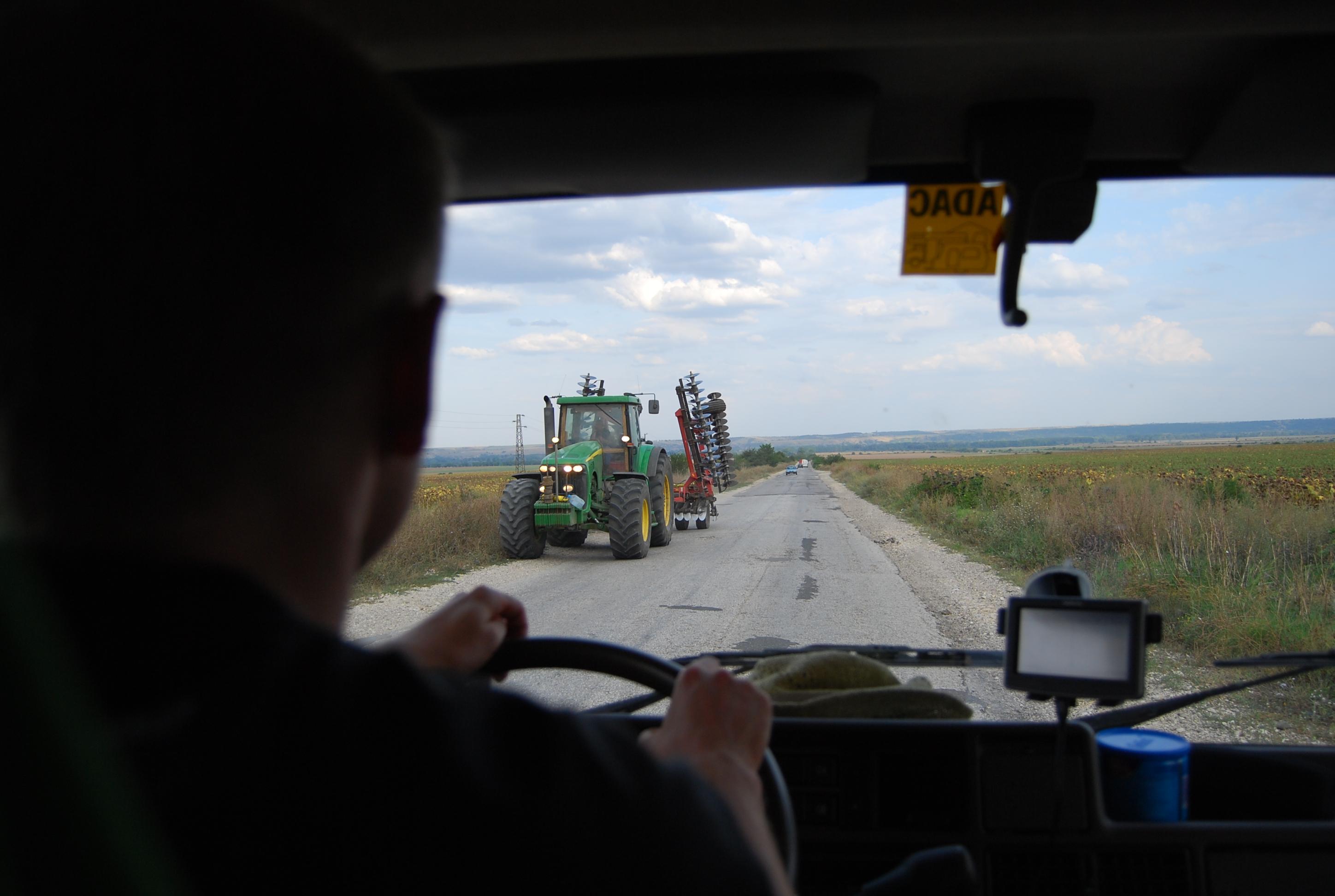
Before we became fans of the Volkswagen T3, we tested various ways to go on vacation. We traveled with the Niewiadów trailer pulled by Twingo, we rode a motorbike, we traveled in a motorhome with friends, by train, by bus, in short, whatever we could, just further.

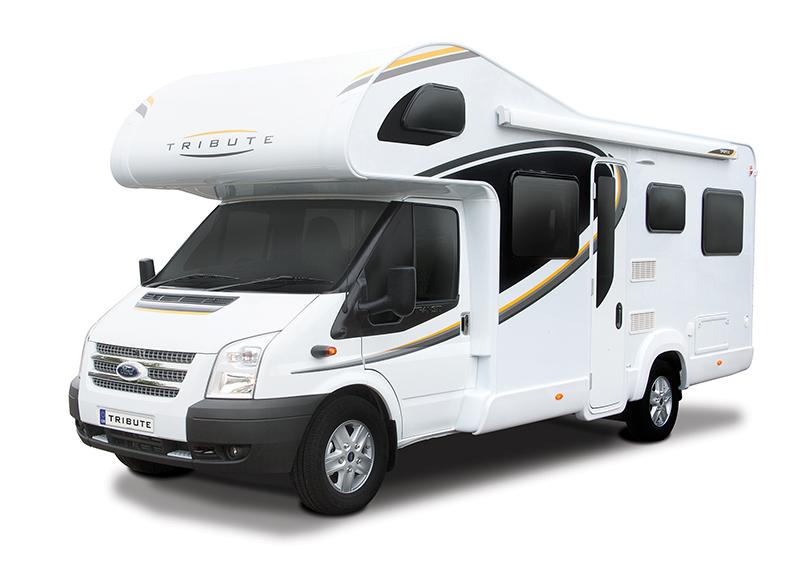
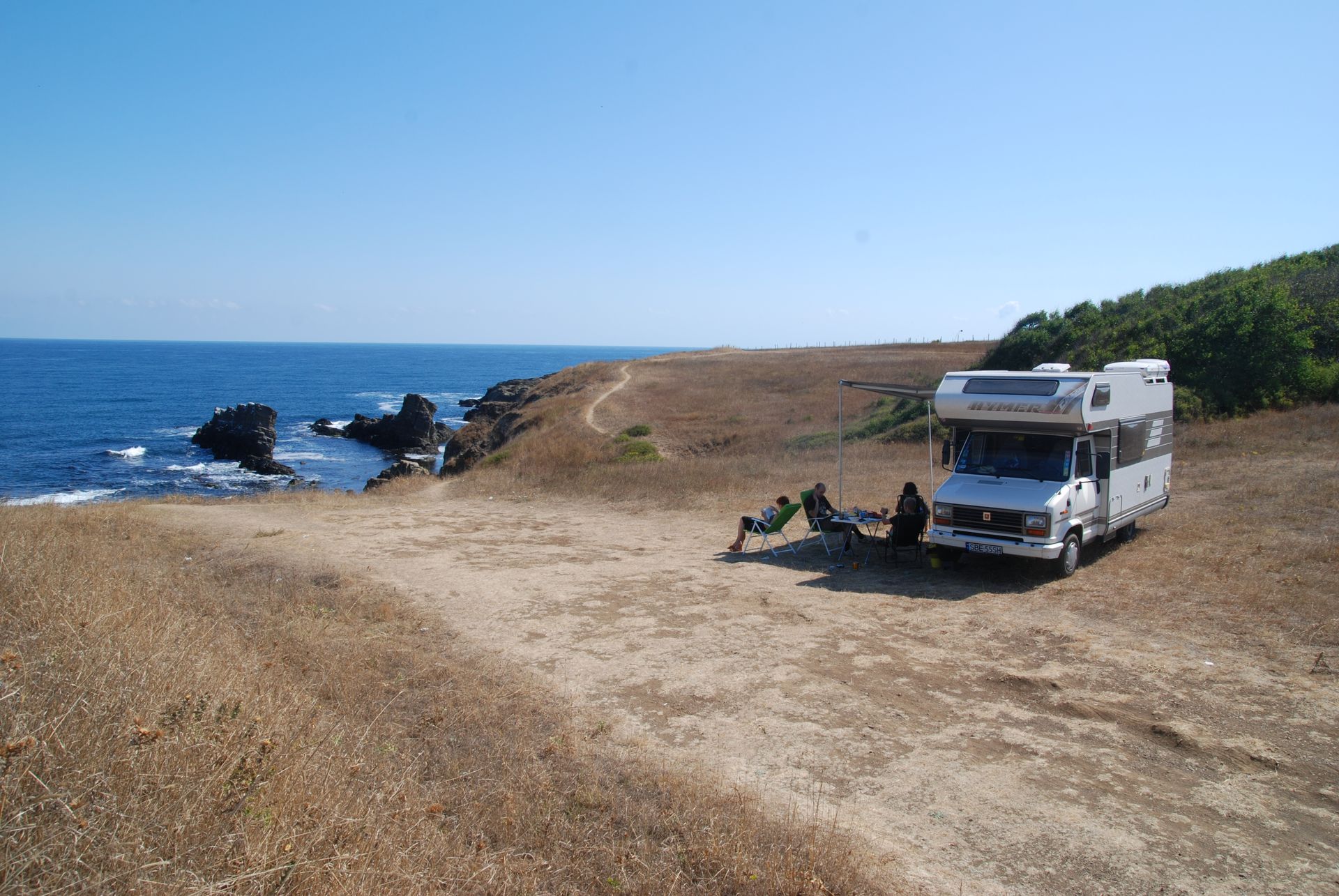
In 2009 we went to Bulgaria with four friends in a motorhome. Five people in one car means it is never boring, there is always something going on. It is a great form of traveling.

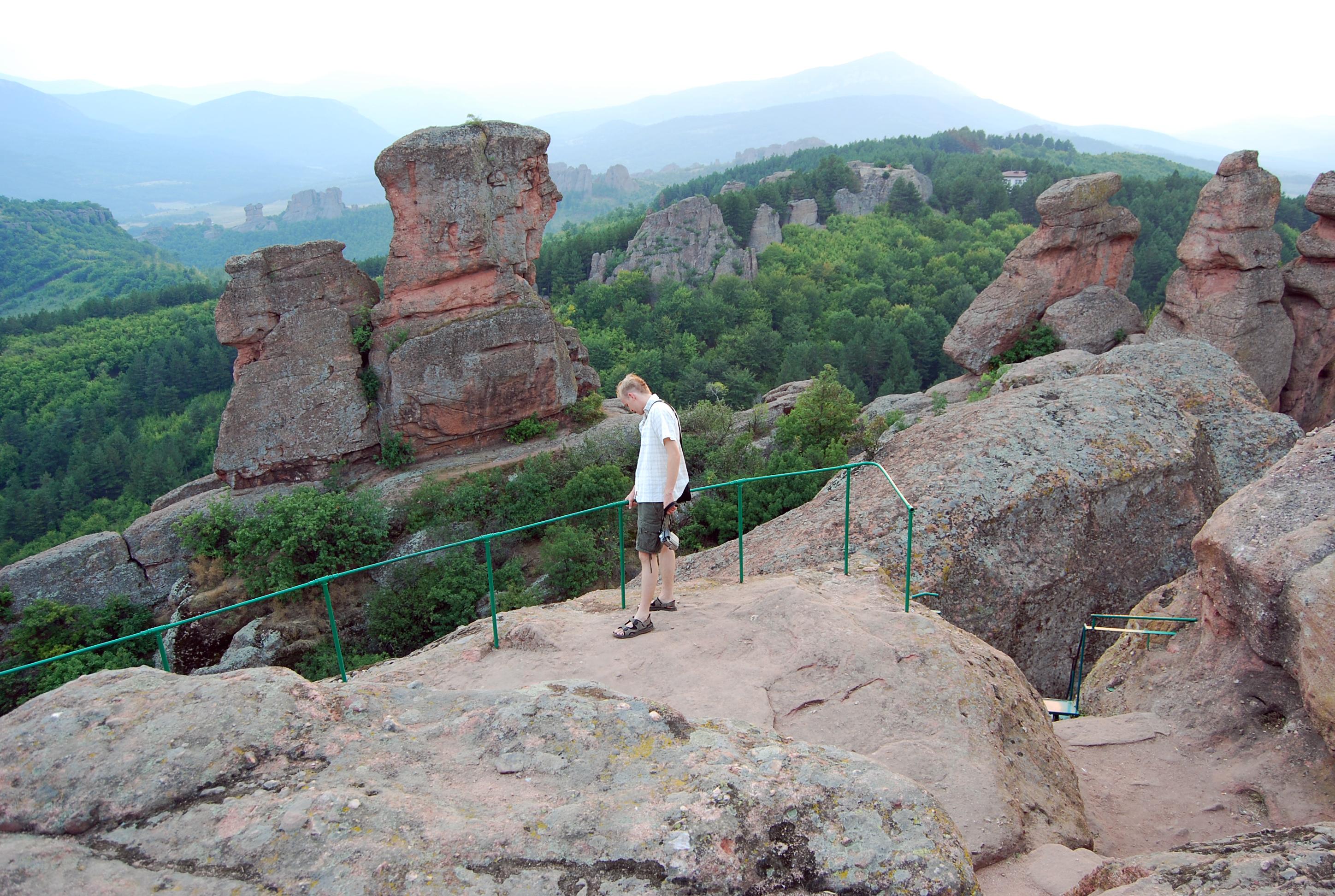
Our first destination in Bulgaria was Belogradchik. We found a tiny campsite with a shower and toilet :) and we stayed there for a few days, feeding nearby stray dogs, even saving one of them from drowning in the city fountain. The town itself is not as great as its surroundings, there are beautiful mountains and a Fortress, and in the center you can bear traces of communism and its influence on architecture, unfortunately.

After the amazing views in Belogradzik, we decided to visit the waterfalls, which we found out through word of mouth, that we must see them, even though the guides do not mention them in a word. Wandering along strange Bulgarian roads, asking here and there, we got there. We crashed our camper into the wild near the entrance to the waterfalls. Krushuna, because that's what the waterfall is called, is a beautiful place for hiking, while walking along the river, you reach a cave, where monks once had their goals. In the evening we lit a fire, these are the advantages of wild camping, and in the morning we went to the next place.

We chose Balchik mainly because of the palace of Queen Maria with the surrounding Botanical Garden. I have to remind you that this was years ago and the gardens looked very dilapidated, perhaps forgotten for a while and just taken care of. However, by straining your imagination a bit, you could see their charm and uniqueness. The campsite near Balchik was also unique, where on a hill in a huge reservoir there was bathing water, and its smell made you want to soapy anything but your enemy. The beach was full of people enjoying healthy mud baths, but the sea also made us angry in this place, the smell of washed up algae on the shore and their amount made flocks of gulls hovering above our heads hunting what was in the seaweed, maybe even alive. We only spent the night one night and went to Sozopol.

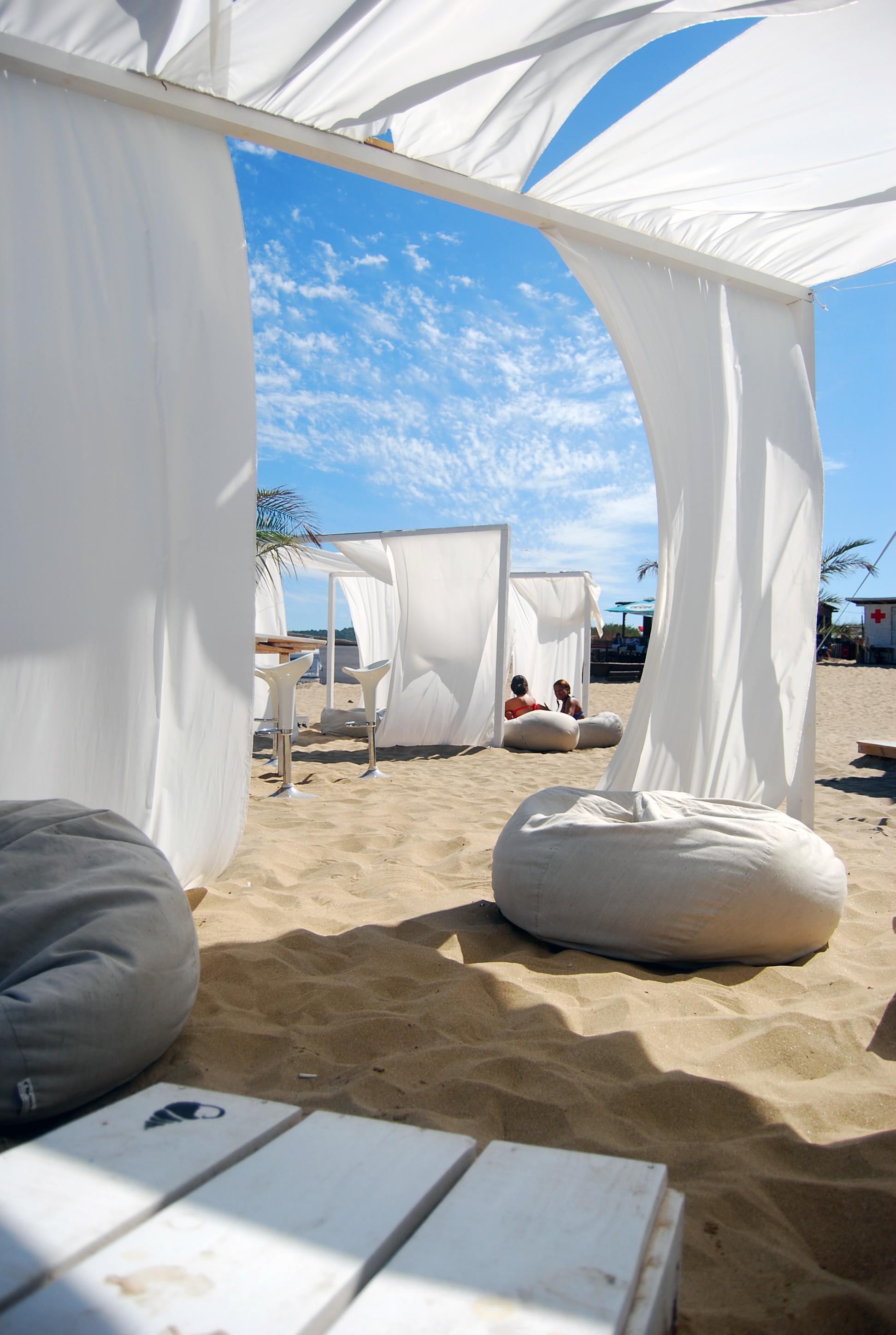
Sozopol has decent campsites with countless beach bars, and although the best way to get to the city center is by a cable car, we did not miss the bustle of the city with lively beaches in the evenings. Of course, we visited the city with its characteristic buildings, we pushed ourselves with tourists between the stalls and returned to the campsite, where in the first bar in the first campsite they serve the best food in the world. We got to know a Bulgarian director with Polish roots and for a few days he showed us around the area and suggested what to eat and where.

Thanks to him, we went on a motorboat trip on the Veleka River and spent the night in the town of Sinemorets (or a lot of people spend the night in the wild right there - by the cliff). A boat trip is a lot of fun, you can watch turtles in their natural environment and take a walk on the beautiful sandy beach, because there is a short break to stretch your legs. In Sinemoretz, we ate a delicious dinner at a restaurant recommended, unfortunately we do not remember its name. However, we remember well the place of accommodation, we reached the end of the village and there was the only exit to empty fields and there we stayed overnight, swayed to sleep with the sound of the waves. An unearthly place, so if someone has the opportunity, we recommend it! We came back to Sozopol for the next few days and on the way home we also visited Veliko Tarnovo and Nessebar.

Veliko Tarnovo presented us with a museum, castle ruins and picturesque buildings, compact due to the city's location on the hills. However, there was something sad about the area and we were relieved to go on.

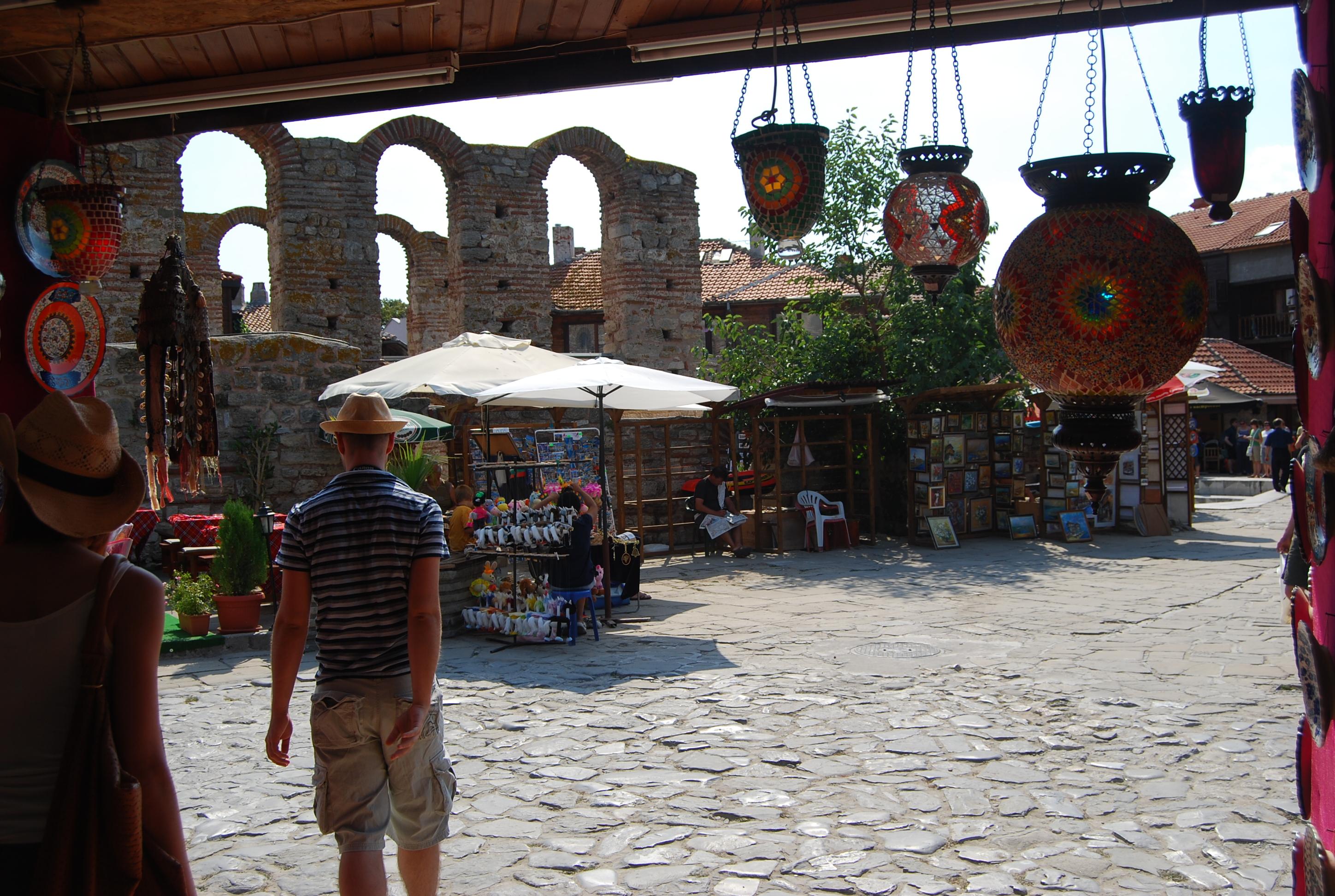
It is not without reason that Nessebar has several monuments entered on the UNESCO list, the very location on the peninsula makes the town attract tourists, the beautiful old town is also a tourist hit. It is definitely worth visiting the old town, drinking a coffee in one of the many pubs, but the number of visitors must take longer than that.

We recommend Bulgaria for its delicious cuisine, nice cities, warm climate and affordable prices. We'll probably go there again sometime ...
BULGARIA – image 1
BULGARIA – image 2
BULGARIA – image 3
BULGARIA – image 4
VWT3 Silesia
VWT3 Silesia

We are a group of Volkswagen Transporter T3 car enthusiasts, representing VW T3 UPPER SILESIA CLUB. We organize rallies and meetings of fans of this model to share the experience gained during domestic and foreign trips as well as solutions to technical problems and modifications to their cars.

Also read

FRANCE 2010 – image 1
Travel reports
FRANCE 2010
The trip to France was supposed to be a pilgrimage along the route of French sanctuaries and it was like that, although we could admire the beautiful landscapes of, among others, French Alps, wonderful atmosphere of small towns and great quality of French (even local) roads. Day 1 - departure around 5.00 from Kielce (Skoda Superb TDI 170KM + Adria 4252) with a 4-hour rest near Złotoryja. After eating a hearty lunch, we head to the German motorway to drive the boring road through our neighbors' country at the prescribed speed (unfortunately 80 km / h). The road takes us 2 days - the first night (1050 km each) in the pouring rain in the parking lot at the gas station near Willenberg - not only we stayed there for the night - next to a trailer from the Netherlands, Belgium, Germany, Poland etc. Here the installed battery came in handy in the trailer. Day 2 - further travel on the German motorway and entry to France - we decided not to take the highways, to see a little more than noise barriers ... Drive through several charming towns where time seems to have stopped (many old stone houses, tiny churches, intimate market squares) and accommodation near the town of Gy - a small town of Bucey-les-Gy , a market and a gas station by the road, and next to it, a beautifully fenced square with a table and benches, where you can eat (next to us, a camper from France is staying here). Distance traveled - about 650 km. Day 3 - After breakfast, we go to visit Cluny , where we saw the remains of the former Benedictine abbey and took a walk through the narrow streets of the city. The next point is Ars - the city of St. John Maria Vianeya - the patron saint of parish priests. We saw the Basilica, which houses the remains of the Saint and the house where he lived and worked. In the parking lot, rest and lunch - here we also met a coach from Silesia with pilgrims. From Ars through Grenoble we went camping in Corps (20 km from La Salette). We climbed up to 1600 meters above sea level, admiring the beauty of the French Alps - also from the campground. We add another 250 km to the odometer. Day 4 - After breakfast at a small family campsite, we drive 20km further and 2000m higher - to La Salette - a mountain village in the French Alps , near Grenoble , known mainly for the apparition of the Virgin Mary in 1846 . The Mother of God appeared only once on September 19, 1846 to two shepherds: 15-year-old Melania Calvat and 11-year-old Maksymin Giraud on a mountain overlooking La Salette in the High Alps in France. At the site of the apparition (approx. 1750 m above sea level) a spring gushed out. It flows uninterruptedly from the day of the apparition until today. After conducting research, which included, inter alia, when the children were interviewed and their accounts were verified as well as the events usually connected with the apparitions (e.g. extraordinary healings), after receiving the consent of the Pope , Bishop Philibert de Bruillard , bishop of the Diocese of Grenoble announced on September 19, 1851 that the Apparition of the Virgin Mary to two shepherds on September 19, 1846 , on one of the mountains belonging to the Alpine range, located in the parish of La Salette, in the deanery of Corps , it has all the features of truthfulness, and the faithful have reasonable grounds to consider them unquestionable and certain. After September 19, 1846 , Melania, and later Maximinus, assisted by his converted father, set up crosses to mark the site of the apparition. In the spring, pilgrims set up 14 traditional Stations of the Cross , marking the path that the Beautiful Lady followed after finishing her conversation with the children. This road, resembling the letter "S", exists to this day and is located near the source. It ends with a figure representing Mary rising to heaven, with her face facing Rome , to emphasize unity with the Church. Over the years, popes have granted further privileges, both to the devotion to Our Lady of La Salette and to the Sanctuary of La Salette. So much history ... The road to the Sanctuary is narrow and winding, but the views ... are breathtaking. We participate in the Holy Mass. in Polish, because in the parking lot there was the same bus that we met in Ars. We admire the beauty of this place from two hills. Something amazing. Interesting fact: there was a camper van in the parking lot and the passengers were eating breakfast, admiring the Alps - I envied them a bit, because the view of the setting and rising sun in this place must have been amazing (but next time I will come here with a trailer). We go to the camping for dinner. We spend the afternoon at the lake, 2km from and 1000m below the campsite. Hot water and a view of the lake and the Alps again. In the evening, dinner, settlement of the camping fee (2 nights / 42euro), preparation of the caravan and car for the next road. Day 5 - early morning departure by unpaid road (thanks to this we are going through the valley among the mountains) do Avignon - The Papal Palace used to be the seat of popes in the past (from the 14th to the 18th century). Built of white stone, the stronghold is the largest Gothic building in Europe. In the complex located on the Rocher des Doms there is the so-called Little Palace, once inhabited by cardinals. Other buildings include the 13th-century Romanesque cathedral with frescoes by Simone Martini, the Ramparts, and the 12th-century Pont St-Benézet bridge. The entire complex of significant historical value was inscribed on the UNESCO World Heritage List in 1995). From here, take the motorway to Lourdes . Here, near Lidl, we meet a Pole who shows us the way to the House of the Polish Catholic Mission, where we stay for 3 nights. Place for a trailer, car, electricity connection, use of toilet and showers - 15 euro / day. The route is 700 km (of which 400 km via the motorway - the cost of a section of 40 euros). Day 6 - night and time until lunch in the rain, so we spent it in the trailer. After lunch, depart for the Sanctuary of Lourdes . Prayer and stay in the Sanctuary, at the Grotto, where pilgrims can concentrate and unhurriedly participate in religious ceremonies, lots of sick people, in wheelchairs, also during the procession with lanterns, in which we participated in the pouring rain at 9 p.m. Day 7 - continued stay in Lourdes . Sanctuary, Grotto, souvenirs, taking water from the Miraculous Spring, shopping, refueling the car and resting before the onward journey. Day 8 - we head home via Rocamadour - a 7th century sanctuary, the oldest Marian pilgrimage site in France. Navigation takes us like a fast, though very narrow path through the forest and over the cliffs ... After about 25 kilometers, it turns out that we are driving along the slope of the mountain, from where on the other side, on the other slope of the mountain, as if stuck to the rocks, is Rocamadour. Amazing view. If we were going "normally" we would not even know that such a road exists. After the adventures of navigation, which led us, among others on a 2m wide bridge, we managed to go on a route towards Poland. In the evening we are looking for a place to stay ... Dinner in a beautiful, well-kept, but empty parking lot - we do not want to spend the night here. The observation deck on the route… We see Clermont-Ferrand . We're going until 10.30 pm… We finally managed to find a parking lot and, accompanied by a Polish truck, we went to sleep. Day 9 - onward journey towards the Franco-German border, on the way we leave the road to Paray le Monial - the place of apparitions of the Sacred Heart of Jesus St. Margaret Alacoque. (From the Paray-le-Monial monastery, the cult of the Sacred Heart has spread to the whole of France and the world. Every year the temple is visited by about 300,000 pilgrims from all over the world). Lunch in a well-known place, which is Bucey-les-Gy ... After 200 km, a symbolic border and we enter the monotonous German highway. Overnight in the parking lot. Day 10 - Germany and entry to Poland, here we are looking for a place for dinner, CB recommends a restaurant at the BP station behind the "rooster". We found the "rooster" and did eat a good dinner. Then just visiting the company selling trailers (I already want to buy a bigger one) - and here again the navigation leads us on the "fast" road through the fields, where there is no asphalt! From the company, we take a different route to the highway. Approx. 23.00 we are at home. Summary: - route: 5300km, - time: 10 days, - cost: PLN 950 / person: fuel, tolls, camping, health insurance, food, drinks. Conclusions: If France is the destination, it is worth sneaking through Germany on the motorway. On site, to see something, you have to leave the highway (very expensive in France). The free roads are of very good quality and there are no major problems with driving a trailer even to small towns. The problem is with parking lots - there are a lot of parking lots right next to the road (a bay), but apart from a garbage can, there is nothing there, one car with a trailer will fit. It is also worth not waiting with refueling until the reserve lights up. And not completely trust the navigation - it's better to have the current map and correct the indications.